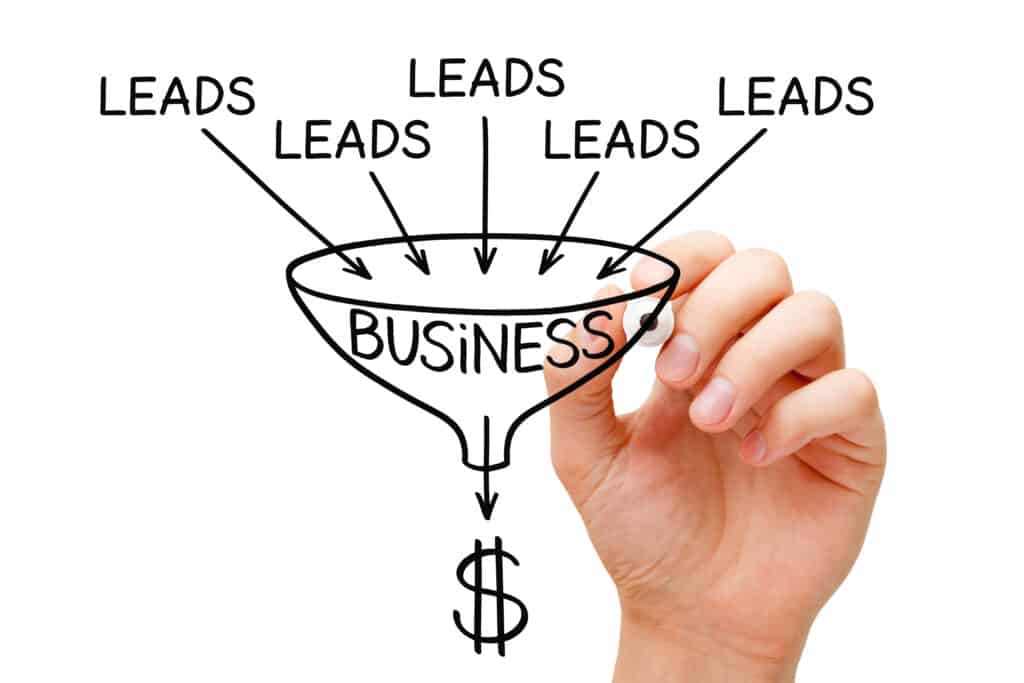
When it comes to lead generation, having a well-designed and optimized funnel is essential. A lead generation funnel is a series of steps or touchpoints that a potential customer goes through from initial contact to conversion. At each stage of the funnel, prospects must be nurtured and encouraged to move forward until they become a customer.
Creating a successful lead gen funnel takes time and effort, but with the right strategies and tactics, it’s possible to expand your funnel and increase conversions. In this post, we’ll explore several tips and tricks that you can use to optimize your lead gen funnel, from understanding your target audience to crafting effective lead magnets to analyzing and refining your funnel for maximum success.
First, it’s important to understand your target audience and tailor your funnel accordingly. You should create audience personas that detail the needs, pain points, and behaviors of your ideal customers. By doing so, you can better craft your messaging, design your lead magnets, and create a personalized experience for prospects at each stage of the funnel.
Next, you should focus on crafting effective lead magnets that entice and engage your target audience. This may include eBooks, whitepapers, webinars, or other types of content that offer value and education to your prospects. By providing valuable content at the top of your funnel, you can establish authority and trust with your audience and move them closer to conversion.
Understanding Your Target Audience: A Crucial Lead Gen Funnel Element
One of the most critical aspects of any lead generation campaign is understanding your target audience. Without this knowledge, it’s nearly impossible to build an effective funnel that delivers the right messaging to the right people at the right time. However, identifying your target audience goes beyond broad demographic information – it’s about diving deeper into the needs, interests, and pain points of your ideal customer.
One effective way to understand your audience is to develop buyer personas, which are detailed descriptions of your typical customers based on factors such as age, location, job title, interests, and challenges they face. By creating these personas, you can gain a more comprehensive view of who your target audience is, what motivates them, and why they might be interested in your product or service.
Another critical element in understanding your target audience is conducting thorough market research to determine industry trends, needs, and pain points. This research can be done through a variety of methods, including surveys, focus groups, and social media listening. By analyzing this data, you can better tailor your messaging to the specific needs of your audience and create content that resonates with them on a deeper level.
Understanding your target audience can also help you identify the best channels to reach them, whether that’s through social media advertising, email marketing, or other tactics. By determining where your audience spends their time online, you can develop a more targeted approach to your lead gen funnel and ensure that you’re reaching potential customers in the right place at the right time.
Once you have a clear understanding of your target audience, you can begin to develop content and messaging that speaks directly to their needs and pain points. By addressing these concerns in your marketing materials, you can establish trust with potential customers and begin to build a relationship with them that ultimately leads to conversions and sales.
In conclusion, understanding your target audience is a crucial element in lead generation. By developing detailed buyer personas, conducting market research, and tailoring your messaging to the specific needs of your audience, you can create a more effective lead gen funnel that delivers real results for your business.
Leveraging Social Media: From Organic Posts to Paid Ads
Social media platforms have become a ubiquitous part of modern life. As a result, digital marketers can’t afford to ignore the marketing potential of social media. In our hyper-connected world, social media presence can be a crucial element in your lead generation funnel. But how do you create a social media strategy that builds a strong presence, engages your audience, and generates leads?
Firstly, it’s essential to pick the right platform for your brand. You don’t have to be active on every social media platform out there, but rather select those that align with your target audience and business goals. Each platform has different demographics, interests, and expectations, so research and experimentation are key.
Once you’ve chosen your platform, it’s time to create a consistent brand voice and image. Your social media profile should reflect your brand identity, values, and tone. This consistency fosters trust and recognizability with your audience. Your content should also be tailored to each platform and format, with a balance of promotional and valuable content.
Organic posting is a great way to engage your audience and grow your following. It’s also cost-effective and a great brand awareness tool. However, organic reach is limited, and social media algorithms can be a fickle mistress. That’s where paid advertising comes in. Paid advertising is a powerful tool that allows you to laser-target your audience and ensure your content reaches the intended people.
Facebook, Instagram, and LinkedIn all offer different advertising formats, from sponsored posts to display advertising. Identify which format aligns with your objectives and experiment with different targeting options. It’s important to track your results and refine your campaigns to get the best ROI.
Social media is now a pay-to-play platform, but that doesn’t mean organic posting should be neglected. A successful social media strategy should have a balance of both paid advertising and organic content. With a consistent brand image, tailored content, and targeted campaigns, social media can be an effective lead generator that complements your other funnel elements.
Crafting Effective Lead Magnets: From eBooks to Webinars
Lead magnets are incentive-based offers that businesses use to attract potential customers and convert them into leads. Crafting effective lead magnets is crucial to a successful lead generation funnel. The right lead magnet can increase your lead capture rate, engagement, and conversion rates. In this post, we will explore the different types of lead magnets available and provide tips on crafting them effectively.
eBooks: eBooks are one of the most popular lead magnets for B2B businesses. They are in-depth resources that provide value to your target audience and help establish your business as an authoritative figure in your industry. To craft an effective eBook, start by identifying a topic that aligns with your target audience’s interests and pain points. Use eye-catching visuals and clear formatting to engage readers. Don’t forget to include a strong call-to-action that directs readers to the next step in your funnel.
Checklists and Templates: Checklists and templates are quick and easy lead magnets that can provide your target audience with immediate value. They are particularly useful for businesses offering a service or product that requires a series of steps. When designing checklists and templates, keep it simple and easy to use. Make sure they are visually appealing and branded with your business’s colors and logos.
Case Studies: Case studies are particularly effective lead magnets because they provide social proof of your business’s value proposition. When crafting effective case studies, make sure to showcase how your product or service solved a specific problem for a client. Use visuals, statistics, and quotes to illustrate the positive results your business achieved.
Webinars: Webinars are an excellent way to provide in-depth information and insight on a specific topic. They also give businesses the opportunity to interact with their audience in real-time through Q&A sessions. When crafting an effective webinar, start by identifying a topic that aligns with your target audience’s interests. Use engaging visuals, interactive polls, and clear explanations to keep your audience engaged. Don’t forget to promote your upcoming webinar through social media, email marketing, and other channels to maximize attendance and engagement.
Free Trials: Free trials are particularly effective for SaaS businesses or other companies offering software products. They provide potential customers with the opportunity to try out your product or software before making a purchase. When crafting an effective free trial, make sure it aligns with your target audience’s needs and interests. Use onboarding processes to guide users through the trial and make sure to provide excellent customer support throughout the trial period.
Overall, crafting effective lead magnets is an essential aspect of any successful lead gen funnel. Remember to identify your target audience’s pain points and interests, use engaging visuals and clear formatting, and always include a strong call-to-action. By doing so, you can convert potential customers into engaged leads and drive your business’s growth.
Nurturing Leads with Email Marketing: Tips and Best Practices
Email marketing is a crucial component of any successful lead generation strategy. However, it’s not enough to just blast out generic emails to your entire contact list. In order to effectively nurture leads through the sales funnel, you need to personalize your messaging and provide value. Here are some tips and best practices to help you optimize your email marketing campaigns.
First and foremost, make sure you’re segmenting your email list based on criteria such as interests, behaviors, or demographics. This will allow you to send targeted messages that are more likely to resonate with the recipient and drive engagement. You can use automation tools to set up triggered emails based on specific actions or behaviors.
In addition to segmentation, personalization is key. Use the recipient’s name in the subject line and opening greeting to establish a connection. Customize the content of your email based on their interests, stage in the sales funnel, and other relevant data points.
When it comes to content, focus on providing value rather than just promoting your products or services. Educate your leads with informative blog posts, eBooks, or whitepapers that address their pain points or provide solutions to common problems. You can also offer exclusive discounts or free trials to incentivize conversions.
While you want to avoid being too salesy, it’s important to include clear and compelling calls-to-action in your emails. These should be placed prominently in the body of the email, and should clearly communicate what action you want the recipient to take. Whether it’s to schedule a demo, download a resource, or make a purchase, make sure the CTA is relevant and actionable.
Last but not least, make sure you’re tracking and analyzing the performance of your email campaigns. Use A/B testing to experiment with different subject lines, email designs, and content to see what resonates best with your audience. Monitor your open rates, click-through rates, and conversion rates to identify areas for improvement and refine your strategy over time.
Maximizing Conversion Rates: Landing Pages and A/B Testing
Once you’ve attracted potential customers to your website, the next step is to optimize your landing pages for maximum conversions. Your landing page should directly address their pain points, and provide a clear and compelling call to action. Consider using a lead magnet to encourage visitors to share their contact information, and make sure your landing page design is clean, simple, and user-friendly to boost conversions.
A/B testing is a powerful tool for optimizing your landing pages. By testing different versions of your landing page, you can identify the best performing elements and continuously improve your conversion rates. Make sure to test only one variable at a time, such as the headline or the call to action, to accurately determine which version drives the most conversions.
Another crucial element of landing pages is load time. Visitors tend to have short attention spans, and slow load times can cause them to quickly lose interest and give up on your page altogether. To optimize load times, make sure to compress images and minimize code bloat. Additionally, consider using a content delivery network (CDN) to distribute your website content to servers closer to users, which can significantly speed up load times.
When creating landing pages, it’s important to keep in mind that your messaging should align with the expectations that led visitors to click through to your site. Make sure your ads or other marketing materials are accurately representing what visitors will find on your landing page to avoid confusion or disappointment. This will help ensure that the visitors who land on your page are more likely to continue through your lead gen funnel and become paying customers.
Finally, make sure to track and analyze your landing page metrics to see how well your optimization efforts are paying off. Look at metrics like bounce rate, time on page, and conversion rate to identify areas for improvement and refine your landing page strategy over time.
Analyzing and Refining Your Funnel: Tracking Metrics and Adjusting Strategies
Creating a lead generation funnel is not a one-and-done process, but a constant work in progress. To ensure that your funnel is effective, it is important to track your metrics and adjust your strategies accordingly. In this section, we’ll discuss the key metrics you should be tracking and how to make data-driven decisions to improve your funnel.
The first step in analyzing your funnel is to determine your baseline metrics. These metrics could include website traffic, visitor-to-lead conversion rates, and lead-to-customer conversion rates. It is important to measure these metrics over a period of time, as it can help you identify trends and patterns.
Once you have established your baseline metrics, you can start making changes to your funnel and track the impact on your metrics. This is where A/B testing comes in. By creating two versions of your funnel and testing them against each other, you can identify what works best for your audience and adjust your strategy accordingly.
To conduct an effective A/B test, it’s important to only test one variable at a time and make sure you have a large enough sample size. This will ensure that your results are statistically significant and you can make confident decisions moving forward.
In addition to A/B testing, you can also use tracking tools to monitor your funnel’s performance in real-time. Tools like Google Analytics can help you track website metrics, while email marketing platforms can provide insights into email open and click-through rates.
When analyzing your funnel’s data, it’s important to note that not all metrics are created equal. While it may be tempting to focus solely on lead volume, it’s important to also consider lead quality. Are the leads you’re generating actually converting into paying customers? If not, it may be time to rethink your targeting and lead nurturing strategies.
Finally, it’s important to regularly review and refine your funnel. This could involve updating your lead generation tactics, improving your landing pages, or revamping your email marketing campaigns. By continually analyzing your metrics and adjusting your strategies, you can ensure that your funnel is optimized for success.
Conclusion
Expanding your lead gen funnel is an important step towards growing your business and increasing revenue. In this article, we have discussed several tips and tricks for enhancing your lead generation strategies and ultimately boosting conversions.
Understanding your target audience is the foundation of any good marketing campaign. Crafting effective lead magnets, including eBooks and webinars, is another powerful way to attract leads to your business. Leveraging the power of social media platforms through organic posts and paid ads can also help increase your reach and attract new leads. Nurturing leads with effective email marketing campaigns is a key part of the lead gen process, as is optimizing landing pages and conducting A/B testing.
Ultimately, analyzing and refining your funnel through tracking metrics and adjusting your strategies is crucial for long-term success.
By implementing these tips and using a combination of various lead gen tactics, you can develop a strong and effective lead generation funnel that drives results and helps you achieve your business goals. Remember to always keep your target audience in mind and regularly analyze your results to refine your strategies for optimal performance.


