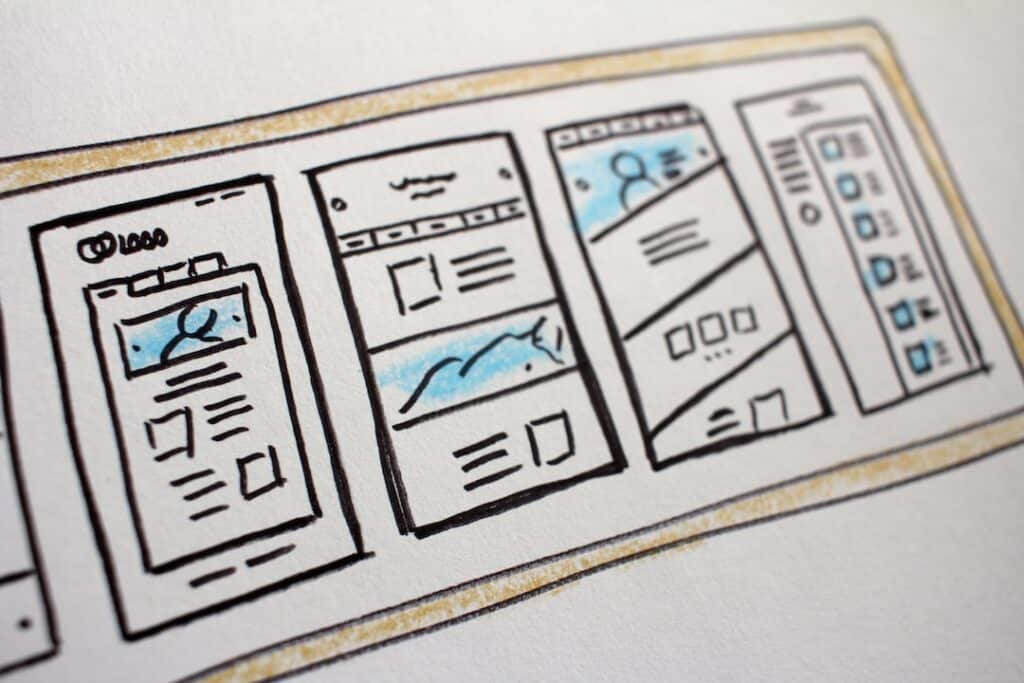
As businesses strive to attract and convert new leads, having an effective landing page can make all the difference. A dedicated landing page is a stand-alone web page designed solely to capture lead information, such as names, email addresses, and phone numbers. These pages are custom-designed to focus on a single product or service, making them highly targeted and visually appealing to potential customers.
When it comes to lead generation, having a dedicated landing page can yield impressive results. By creating a custom landing page, businesses can reduce distractions and eliminate the need for visitors to navigate through a website to find what they’re looking for. This streamlined approach can increase the chances of converting visitors into leads, ultimately leading to more sales.
Design elements play a crucial role in creating an effective landing page. For example, using a clear and concise headline can quickly communicate the purpose of the page. Clear, high-quality images and persuasive copy can help engage visitors and convey the benefits of the product or service being offered. Additionally, creating a simple and intuitive form can make it easy for visitors to provide contact information and become a lead.
While a well-designed landing page can capture leads, it’s important to ensure it’s optimized for search engines. By using relevant keywords and meta-tags, businesses can improve their search engine rankings and drive more organic traffic to their landing pages.
Another crucial aspect of landing page optimization is A/B testing and analytics. By periodically testing different design elements, businesses can continually improve their landing pages to increase conversion rates. Additionally, analytics can provide businesses with valuable insights, such as the number of visitors, click-through rates, and conversions, which can inform future marketing strategies.
Ultimately, a well-designed landing page can serve as a powerful tool for lead generation. By taking a targeted and streamlined approach to attracting new leads, businesses can increase their chances of converting visitors into customers.
How does a landing page contribute to lead generation?
A landing page is a standalone web page that is designed to capture a visitor’s attention and persuade them to take a specific action. In most cases, the primary goal of a landing page is to generate leads by getting visitors to provide contact information such as their name, email address, or phone number.
Unlike a homepage or website, a landing page is designed with a specific purpose and contains minimal distractions, providing visitors with a clear call-to-action. By simplifying the page design and removing any clickable distractions, visitors are more likely to focus on the intended action and boost the chances of conversion.
Landing pages also allow you to target specific audiences with tailored messaging and offers. By understanding your audience and their needs, you can create powerful offers and calls-to-action that are personalized and highly targeted, resulting in a higher success rate.
In addition, landing pages can help you track and measure the effectiveness of your marketing campaigns. By using analytic tools to monitor visitor behavior, you can determine which pages are most effective at generating leads and which need improvement. With this data, you can refine your marketing campaigns and optimize your landing pages for maximum effectiveness.
Another benefit of landing pages is the ability to test different elements and optimize them for conversions over time. By conducting A/B tests on variations of your landing pages, you can identify which elements, such as headlines, images, and calls-to-action, work best and continuously improve your page’s performance.
Ultimately, a well-designed landing page contributes significantly to lead generation by providing the perfect combination of targeted messaging, focused design, and optimized user experience. Whether you are launching a new product, promoting a service, or offering a free trial, a dedicated landing page can make a significant impact on the success of your marketing campaign.
What is a dedicated landing page?
A dedicated landing page is a web page that is designed specifically for a marketing or advertising campaign. Unlike a homepage, which typically includes a range of different information and offers, a landing page is highly focused on a single goal, such as generating leads or making sales. Landing pages can be an incredibly effective tool for businesses looking to improve their online marketing efforts.
One key characteristic of a dedicated landing page is that it has minimal navigation. This means that visitors are not distracted by links to other pages or content, but are instead directed towards completing a specific action, such as filling out a form or making a purchase.
Landing pages are often used in conjunction with other marketing efforts, such as email campaigns or social media ads. When a visitor clicks on a link in one of these campaigns, they are directed to a landing page that has been specifically designed to match the content of the ad or email. This helps to create a seamless user experience and can significantly increase the chances of a conversion.
In addition to being highly focused, landing pages are typically designed to be visually appealing and easy to use. They should be optimized for mobile devices, as an increasing number of consumers are accessing the internet on their smartphones and other mobile devices. This means that landing pages should be easy to read, with clear calls to action that are easy to access and use.
Another key benefit of using a dedicated landing page is that it allows businesses to collect valuable information about their prospects and customers. By including a form on the landing page, businesses can capture contact information and other details about the visitor. This information can be used to segment leads and personalize future marketing efforts.
Overall, a dedicated landing page is a valuable tool for businesses looking to improve their online marketing efforts. By creating a focused, visually appealing page that is optimized for conversions, businesses can significantly increase the chances of generating leads or making sales. When used in conjunction with other marketing efforts, landing pages can be a powerful way to drive growth and improve ROI.
Design elements to consider for an effective landing page
An effective landing page is a crucial factor in the success of lead generation. It is not just about creating any landing page; instead, it is about designing it in such a way that the visitors think it is perfectly crafted for them. The design elements of a landing page are the key to make visitors stay on the page, gather information, and fill out the form with their contact details. Here are some design elements to consider for an effective landing page that will help you achieve your lead generation goals:
1. Eye-catching Headlines: Visitors judge your landing page content in less than 5 seconds. The headline should be straightforward, engaging, and related to the offer.
2. Simple Layout: A simple layout with minimal distractions is preferred. The focus should be on the message and the action that you want the visitors to take.
3. Quality Images: Good quality images can tell a powerful story and make the landing page more attractive to visitors. They should be relevant, clear, and of high-quality.
4. Content Clarity: Ensure that the landing page content is clear and concise. Provide information in the form of bullets or a few paragraphs to make sure visitors can easily understand the message.
5. Compelling Call-to-Action: The purpose of the landing page is to encourage visitors to take action. The call-to-action (CTA) button should be prominent, relevant, and clearly visible. A/B testing can help find the perfect CTA text that works for your landing page.
6. Mobile-friendly Design: With more than half of internet traffic coming from mobile devices, it is imperative to ensure the landing page is mobile-friendly. The design should be responsive and use a mobile-first approach to provide a smooth user experience.
7. Trust Elements: Adding social proof or trust elements such as customer testimonials, security badges, or affiliations with reputable companies can help build credibility and increase conversion rate.
Implementing these design elements in your landing page can significantly increase the chances of lead generation success. The purpose of the landing page is to encourage visitors to take action and provide their contact details. The design should be simple, clean, and focused, with clear and concise content. Finally, be sure to test your landing page variations to find the perfect combination that works for your business.
The importance of A/B testing and analytics for landing pages
A/B testing and analytics play a crucial role in optimizing a landing page for lead generation. A/B testing, also known as split testing, involves comparing two variations of a landing page to determine which one performs better. By conducting A/B tests, marketers can identify the design elements, copy, and other variables that affect a landing page’s conversion rates. These insights can then be used to make data-driven decisions that improve lead generation and ultimately increase revenue.
Analytics plays a complementary role in landing page optimization. By tracking and analyzing key metrics such as bounce rates, time on page, and conversion rates, marketers can gain a deeper understanding of how visitors are interacting with the landing page. This information can help identify pain points and areas for improvement. For example, if a landing page has a high bounce rate, this could indicate that visitors are not finding the information they need. By analyzing the page’s analytics, such as the amount of time visitors spend on the page, marketers can identify what’s causing the high bounce rate and take action to address it.
One type of analytics that’s particularly valuable for landing page optimization is user testing. User testing involves observing real users as they interact with a landing page to identify areas for improvement. By watching users’ behaviors and tracking their eye movements, marketers can determine if the page is easy to understand, if its layout is intuitive, and if its key features are clearly communicated. Based on observations and feedback, marketers can make informed decisions about improving the user experience and overall conversion rate.
Another important aspect of A/B testing and analytics is continuous improvement. Landing pages should not be viewed as a one-time project, but rather an ongoing process of iteration and refinement. By regularly testing new variations and analyzing the results, marketers can continue to make data-driven improvements that increase lead generation and drive revenue. For example, a marketer might test a new headline and find that it improves conversion rates. They can then use this insight to test other elements, such as images, call-to-actions, and more, to continue to optimize the landing page.
In conclusion, A/B testing and analytics are critical tools for effective landing page optimization. By using data to inform design decisions and understanding how visitors interact with a page, marketers can continuously improve the user experience and drive lead generation and revenue.
Using landing pages to improve conversion rates
Conversion rate optimization is a key goal of any lead generation campaign, and landing pages are an essential tool for achieving this. Here are some strategies for using landing pages to improve conversion rates:
1. Keep your landing page simple and focused
The purpose of your landing page is to persuade visitors to take a specific action, such as filling out a form or making a purchase. Avoid cluttering your page with unnecessary elements or distractions that can dilute your message and lower your conversion rates. Instead, focus on a clear, concise message and a strong call-to-action.
2. Use attention-grabbing headlines and visuals
Your headline is the first thing visitors will see when they land on your page, so it’s essential to make it compelling and attention-grabbing. Consider using visuals such as images or videos to reinforce your message and make your landing page more engaging.
3. Optimize your form for maximum conversions
If your landing page includes a form, make sure it’s optimized for maximum conversions. Keep your form fields to a minimum, and make them easy to complete. Consider using a two-step opt-in process to increase engagement and reduce form abandonment.
4. Personalize your landing page for your target audience
Personalization can be a powerful tool for improving your conversion rates. Use data such as location, search history, or referral source to tailor your landing page content and messaging to your target audience’s needs and interests.
5. Test and iterate to continually improve your landing pages
A/B testing is a powerful tool for improving your landing pages’ performance. By testing different variations of your landing pages, you can identify which elements are driving conversions and which ones need improvement. Continually iterate on your landing page design and messaging to maximize your conversion rates over time.
By focusing on the above strategies, you can ensure your landing pages are optimized for maximum conversions and provide a valuable asset in your lead generation campaigns.
Conclusion
In conclusion, a dedicated landing page can become a potent tool to capture leads for your business. It is an effective way of driving traffic during your digital marketing campaigns and encourages your visitors to take specific desired actions.
By employing some of the design elements listed above, you can create a landing page that effectively communicates your message and enhances the user experience. However, this is just the beginning of the journey towards generating more leads for your business.
Optimizing your landing page for SEO ensures that your page ranks highly on search engine results, boosting visibility and driving more traffic. A/B testing and analytics allow you to test and refine your landing page strategy for optimal performance.
Finally, using landing pages to improve conversion rates means you can see a higher ROI for your campaigns and drive more revenue for your business. Whether you want to increase subscription sign-ups or boost sales, a dedicated landing page is the first step towards achieving your goals.
Investing in building effective landing pages is well worth the effort, helping you to achieve better conversion rates and drive more quality leads. With the tips and best practices provided in this article, you can get started on creating a landing page that delivers real results for your business.


