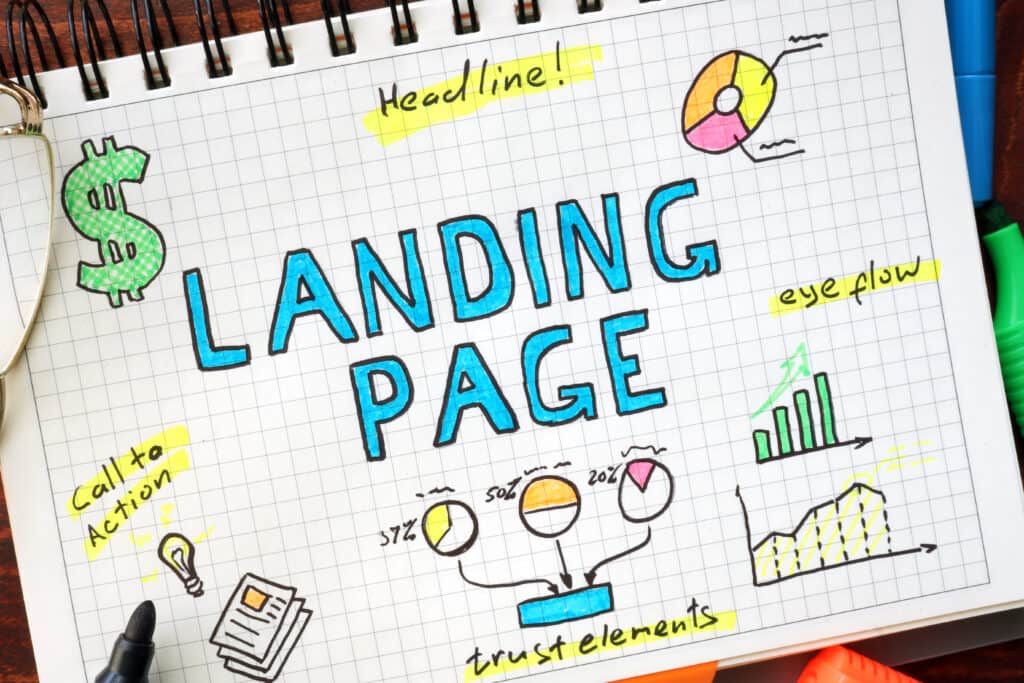
Lead generation is an essential aspect of any business involved in marketing and sales. It is the process of cultivating potential customers for a particular product or service, and ultimately, converting them into loyal customers. However, generating leads is a complex process that requires a well-rounded strategy, and one of the essential components of this strategy is landing pages.
A landing page is a web page that visitors land on when they click on a specific call-to-action (CTA) or a search engine result. The main goal of a landing page is to convert visitors into leads by encouraging them to take a specific action, such as filling out a form or making a purchase.
Since the primary objective of landing pages is to generate leads, they play a crucial role in the lead generation process. Effective landing pages can significantly impact conversion rates and increase the likelihood of turning prospective leads into sales.
But, what makes a landing page effective? To answer this question, it is crucial to understand the characteristics of high-performing landing pages and how to design them. From the color scheme and layout to the content and functionality, each element of a landing page must be optimized to encourage visitors to take action.
Testing and optimizing landing pages is also a critical component of lead generation. Constantly improving landing pages based on user data, analytics and feedback helps to increase conversion rates, and ultimately, the number of leads generated.
Overall, landing pages are a vital tool in the lead generation process. This blog post will provide an in-depth exploration of the role of landing pages in lead generation, with a focus on their design, functionality, testing, and optimization.
Understanding the Importance of Landing Pages in Lead Generation
In digital marketing, lead generation is critical to the success of any business. A lead is typically a person or organization that has shown interest in a company’s products or services. The objective of lead generation is to engage and convert these prospects into customers. One key element of a successful lead generation strategy is the implementation of optimized landing pages that are designed to capture leads.
Landing pages are web pages that are created specifically for marketing or advertising campaigns. They’re designed to encourage visitors to take a specific action, such as filling out a form or making a purchase. An effective landing page should have a clear call-to-action (CTA) that encourages visitors to take the desired action. The content on the page should be persuasive and focused on the benefits that the prospect will receive by taking the desired action.
One of the main benefits of using landing pages is that they provide a better user experience for visitors. Instead of having to navigate through a website to find a specific offer or product, visitors are directed to a targeted landing page with a specific purpose. This reduces distractions and improves the chances of converting visitors into leads.
Landing pages can also be optimized for search engine optimization (SEO) and paid advertising campaigns. By using targeted keywords and creating focused content, landing pages can improve a website’s visibility and ranking on search engines. Additionally, landing pages can be designed to be mobile responsive, which is critical for the increasing number of users who access the internet via mobile devices.
Another important aspect of landing page optimization is the ability to track and measure results. Conversion tracking tools can be used to see how many visitors have converted into leads or customers. This information can be used to continually improve the performance of landing pages and overall lead generation strategy.
In conclusion, landing pages play a critical role in the success of a lead generation strategy. By creating targeted, persuasive pages, businesses can engage prospects and increase the likelihood of converting them into customers. By optimizing landing pages for user experience, SEO, and tracking and measuring results, businesses can continually improve the performance and effectiveness of their lead generation campaigns.
Characteristics of Effective Landing Pages: What Makes Them Stand Out?
Landing pages play an integral role in converting prospects into customers. To achieve this, your landing page must be effective and stand out from the crowd. But, what makes a landing page effective and stand out?
An effective landing page is designed with a clear purpose – to convert visitors into leads or customers. To achieve this, it should have a clear and concise headline, a compelling offer, and a form that captures visitor information.
The design of a landing page also plays a crucial role in its effectiveness. An effective landing page should have a clean and uncluttered design. It should also have a clear visual hierarchy, with the most important elements prominently displayed.
Content is another crucial factor that can make a landing page effective. The content should be relevant, informative, and persuasive. An effective landing page should contain clear and concise copy that highlights the benefits of your product or service.
A strong and compelling call-to-action (CTA) is also an important characteristic of an effective landing page. It should be visually prominent and provide a clear explanation of what visitors will receive when they fill out the form.
Another key characteristic of an effective landing page is a mobile-responsive design. With more and more people accessing the internet on their mobile devices, it’s important that your landing page is optimized for mobile.
Lastly, an effective landing page is constantly tested and optimized for maximum performance. A/B testing can help identify which elements of the landing page are working and which are not. This information can then be used to make data-driven decisions that will improve the effectiveness of your landing page.
In conclusion, creating an effective landing page requires careful consideration of various factors, including design, content, and call-to-action. By ensuring that your landing page has these critical characteristics, you can increase its effectiveness and ultimately drive more conversions.
Designing Landing Pages that Convert: A Guide to Best Practices
Landing pages are an essential tool for converting website visitors into leads. However, not all landing pages are created equal. To turn your landing page into a lead generation powerhouse, you must create one that converts visitors into prospects by following some best practices.
The first step when designing your landing pages is to make sure that your content is clear, concise, and relevant to the user’s needs. You need to offer something that is valuable to your target audience and make sure that the content is easy to read and understand.
The landing page must highlight the benefits of the product or service that you are offering. You should focus on the ways in which it can help make the visitor’s life better, rather than just listing its features. This approach helps build a strong impression in the minds of the visitors and encourages them to take action.
The design of your landing page is equally crucial to its success. You need to ensure that the page is visually appealing and easy to navigate. An unorganized and cluttered page is likely to drive visitors away, whereas a well-design can hold their attention and encourage them to take action.
One essential part of designing a landing page that converts is to make sure your call-to-action (CTA) stands out. This is the element on the page that drives people to the next stage of the buying journey. It should be placed in a prominent position and use language that is both persuasive and compelling.
Another best practice for designing landing pages that convert is to optimize them for mobile devices. With the majority of web traffic now coming from mobiles, it’s essential that your landing pages look good and work just as well on a smartphone or tablet as they do on a desktop computer.
Finally, to design a landing page that converts, you must test it thoroughly. By running A/B tests, you can compare different versions to see what works best, and keep refining your approach based on the results. This process is crucial to help you continue to improve your landing pages over time and keep them generating leads and revenue for your business.
The Science behind Landing Pages: How to Maximize Conversions
Designing a landing page that looks great is one thing, but making it effective at converting visitors into leads is another. When it comes to maximizing conversions, there are several scientific principles that can be applied to create an effective landing page that converts visitors into leads.
The first principle is the concept of visual hierarchy. This means that the most important elements on a landing page should be the most prominent and eye-catching. This includes the headline, CTA button, and any supporting images or graphics. By using visual hierarchy, visitors will be drawn to the most important elements, making it more likely they will take the desired action.
The second principle is the concept of cognitive fluency. This means that the easier it is for someone to understand and process information, the more likely they are to take action. To create cognitive fluency on a landing page, use clear and concise language, avoid complex words or industry jargon, and use bullet points or numbered lists to break up large blocks of text.
Another scientific principle that can be applied to landing page design is the concept of social proof. Essentially, social proof is the idea that people are more likely to take an action if they see that others have already done so. One way to incorporate social proof on a landing page is to include customer testimonials or reviews, or to showcase any awards or recognition the company has received.
One of the key elements of a high-converting landing page is the use of persuasive copywriting, which is the process of using language and rhetoric to influence or persuade a reader. Good copywriting should focus on the benefits of the product or service being offered, use emotional language, and create a sense of urgency.
Another important factor for maximizing conversions on a landing page is the use of persuasive design elements. This includes using contrasting colors to draw attention to the CTA button, designing a clear visual path that leads the eye towards the form or button, and using white space effectively to make the page feel less cluttered and more visually appealing.
Finally, to truly maximize conversions on a landing page, it’s important to continually test and optimize the page based on data and feedback. This can involve conducting A/B tests on different page elements, using heat maps to understand how visitors interact with the page, and analyzing conversion rates to see what elements are working and what needs improvement.
Testing and Optimizing Landing Pages: Why Constant Improvement is Key
Landing pages are a crucial part of any lead generation strategy, but creating them is just the beginning. Once your landing page is live, you need to monitor its performance, test different elements, and optimize it to maximize conversions. In this guide, we’ll explore why constant testing and optimization is key to maintaining a strong landing page.
The first step in testing and optimization is to establish benchmarks for your landing page’s performance. This will give you a clear idea of what you’re working with and help you identify areas for improvement. Key metrics to track include conversion rate, bounce rate, and time on page.
With benchmarks established, you can begin testing different elements of your landing page to see what works best. This might include testing different headlines, images, calls to action, or form lengths. It’s important to only test one element at a time to accurately measure its impact on conversions.
As you gather data from your tests, you can use it to make informed decisions about how to optimize your landing page. For example, if you find that changing the color of your call to action button significantly improves conversion rates, you might apply that change across all of your landing pages.
It’s important to remember that testing and optimization is an ongoing process. Even if you’ve achieved great results with your landing page, there’s always room for improvement. Small changes can have a big impact, so it’s important to continue testing and optimizing over time.
A/B testing is one of the most common testing methods for landing pages. With A/B testing, you create two versions of the same landing page, each with a different element that you want to test. You then split traffic between the two pages and compare their performance.
Another important factor in testing and optimization is audience segmentation. By segmenting your audience based on factors such as demographics or behavior, you can create landing pages that are tailored specifically to their needs and interests. This can help improve engagement and ultimately lead to more conversions.
In conclusion, testing and optimization is a critical part of creating effective landing pages. By constantly monitoring performance, testing different elements, and optimizing your page over time, you can ensure that your landing page is doing everything it can to maximize conversions and generate leads for your business.
Conclusion
In this blog post, we discussed the importance of landing pages in lead generation and examined the key characteristics of effective landing pages that help them stand out. We also explored the science behind landing pages and provided tips on how to maximize their conversion rates through various techniques such as psychological triggers and social proof. Additionally, we highlighted the significance of testing and optimizing landing pages on an ongoing basis in order to continuously improve their performance and results. By integrating landing pages into your lead generation strategy, you can increase your chances of capturing more leads and driving more sales. A well-designed landing page can do wonders for your business and bring in positive results. Remember, there is no one-size-fits-all approach to landing pages. The best way to create a successful landing page is to test and optimize it using various techniques and tools until you find what works best for your audience and business goals. We hope that this guide has provided useful insights and practical tips on how to create effective landing pages that can help you achieve your lead generation objectives. Keep experimenting and improving your landing pages to take your business to the next level!


